
Photo-responsive materials
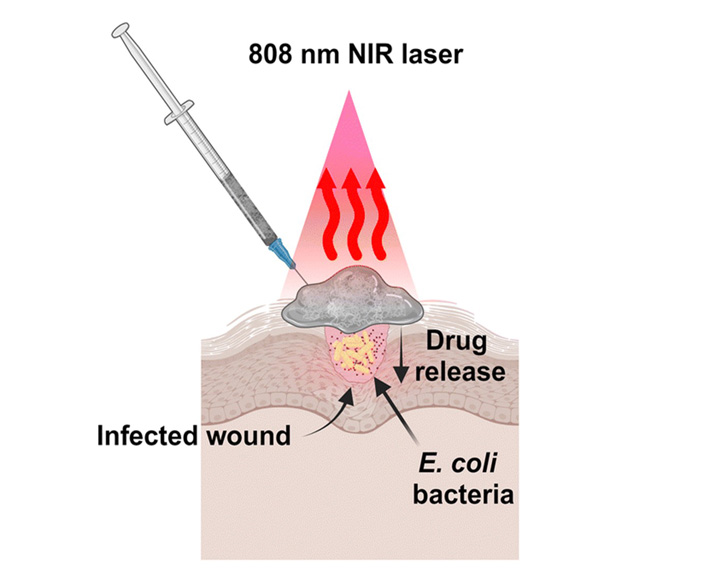
We design photo-responsive biomaterials that can interact with light to enable controlled biological and therapeutic functions. Our materials are engineered to respond to specific wavelengths, allowing spatial and temporal modulation of processes such as drug release, tissue regeneration, and antibacterial activity. By combining thermoresponsive polymers and photo-activated nanoparticles, we fabricate systems that offer on-demand activation and reversible behavior. These smart materials offer new opportunities for non-invasive, precise biomedical applications.
Conductive polymers
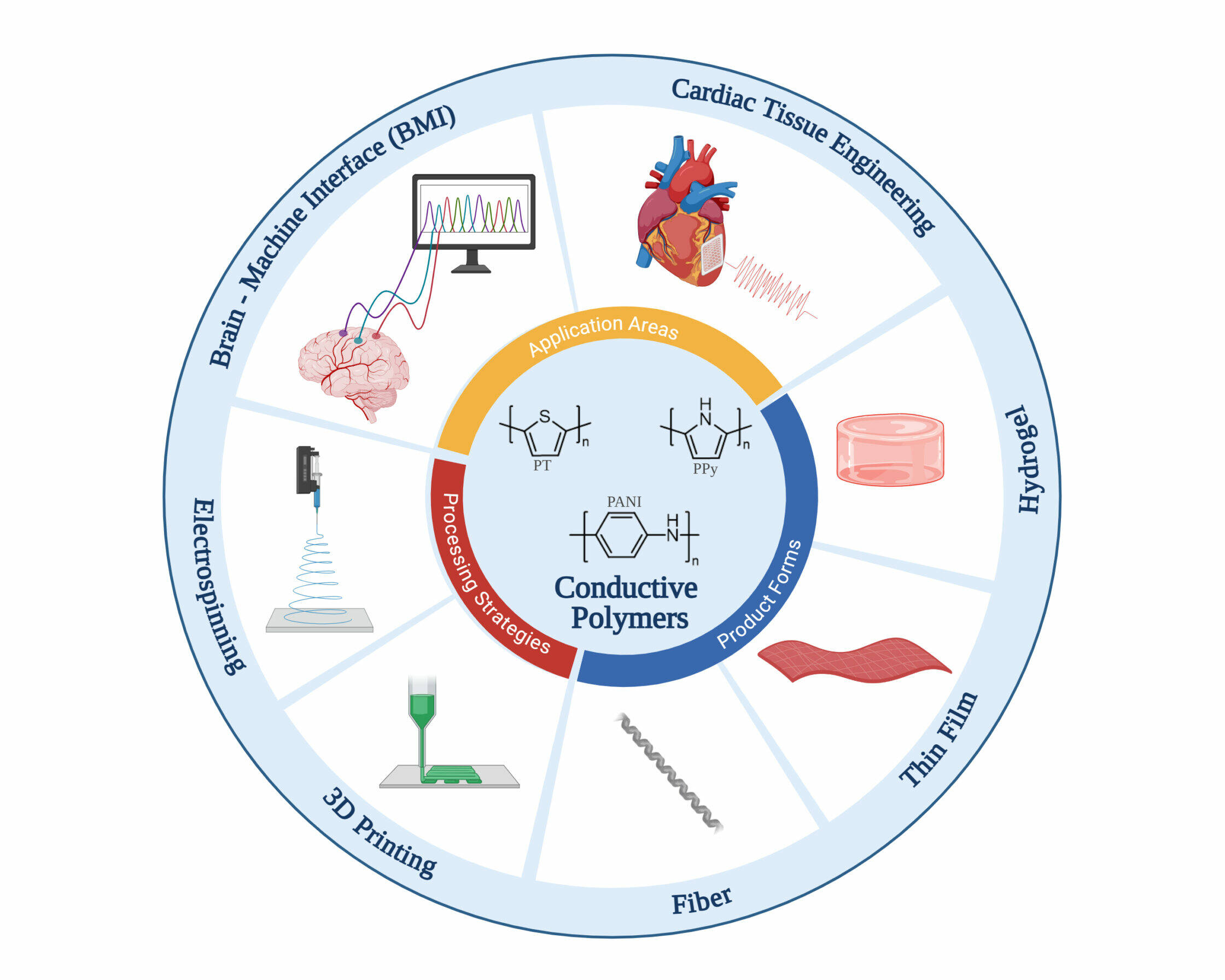
We develop advanced electrically conductive platforms based on various conjugated polymers with customized architectures, achieved through electrospinning and 3D printing. Over the last decade, our attention has focused on the use of tailor-designed polythiophene derivatives for the development of advanced biomaterials, finding applications in various forefront fields, including brain-machine interfaces (BMIs) and cardiac patch systems.

Small and biological drug delivery
We design innovative polymer-based systems for the controlled release of small molecules and biologics, using localized delivery platforms. Our portfolio includes stimuli-responsive hydrogels, electrospun fibers, 3D-printed biomaterials, and micro- and nano-structured platforms, which enable non-invasive administration of innovative bioactive agents. Core expertise encompasses the encapsulation of drugs in biocompatible matrices, the stimulation-triggered release of drugs, and the enhancement of tissue penetration, resulting in improved therapeutic efficacy.
Injectable biomaterials
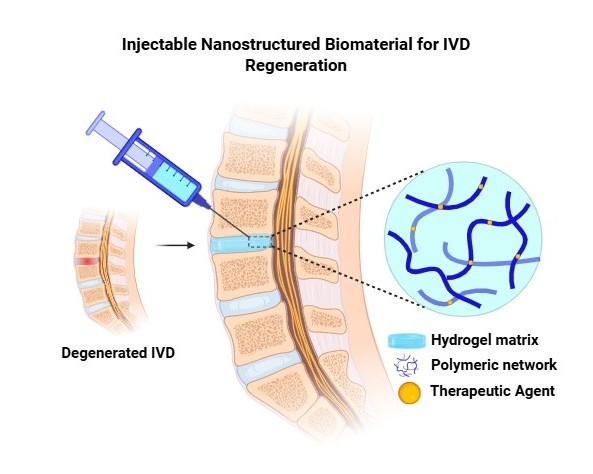
We design injectable biomaterials that integrate nanostructured architecture, light responsiveness, and biocompatibility to enable minimally invasive, tissue-sparing therapies. Using electrospinning, laser-assisted fabrication, and nanocomposite hydrogel engineering, we develop adaptive systems with antibacterial, self-healing, and controlled drug-release capabilities. One of our key approaches involves tailoring nanofiber scaffolds into injectable composites for the regeneration of intervertebral discs. These multifunctional platforms reflect our commitment to advancing clinically relevant biomaterials for next-generation regenerative medicine and tissue engineering.
Self-healing polymers
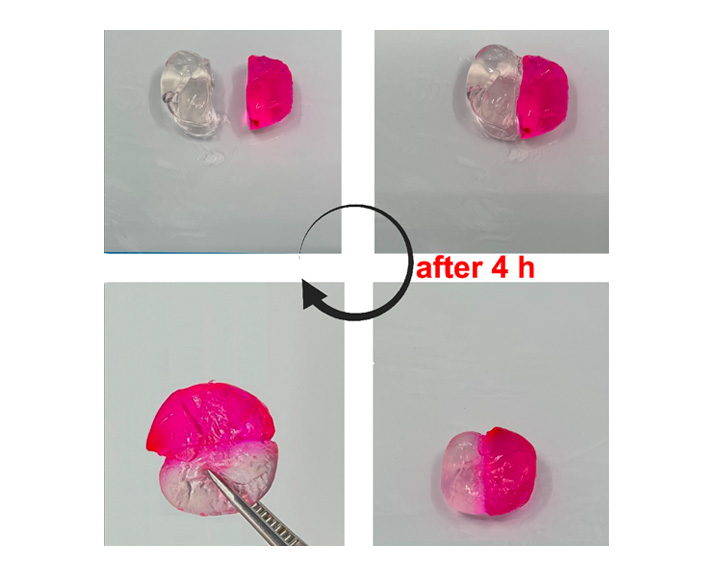
We produce polymer networks that have the capabilities to autonomously repair damage by integrating reversible interactions. This phenomenon can be attributed to the dynamic physical or chemical interactions, including supramolecular assembly. We design and develop self-healing hydrogels with various features (mechanical performance, biocompatibility, conductivity, antibacterial ability, and multi-responsivity). We work with materials applied as flexible sensors, supercapacitors, actuators, adhesives, wound-healing platforms, drug delivery systems, and 3D printing.