Who we are
The Division of Functional Polymer Nanomaterials (FPN) operates within the Department of Biosystems and Soft Matter at the Institute of Fundamental Technological Research, Polish Academy of Sciences. FPN is led by Professor Filippo Pierini, who established the Division in 2024.
Our research encompasses a broad range of topics, unified by a shared focus on innovative approaches that apply nanotechnology principles in polymer-based systems. At FPN, we conduct cutting-edge studies that bridge fundamental academic research with real-world biomedical applications.
Mission statement
Our mission is to explore and elucidate the structure and function of polymer-based nanomaterials, building the fundamental knowledge required to drive innovation in material science and its applications. Through interdisciplinary research, we aim to design and develop functional polymers that utilize nanotechnological principles to tackle critical challenges in biomedicine, sustainability, and advanced materials engineering.
What we do
We design and engineer advanced polymer-based materials across nano-, micro-, and macroscopic scales. Our work integrates electrospinning, laser structuration, and 3D printing to build fibrous scaffolds, patterned architectures, and hybrid structures with precisely defined properties.
We develop functional materials with optical, electrical, and bioactive properties, including photoresponsive and conductive systems, as well as platforms for the controlled delivery of small molecules and biologically active drugs.
Our technologies are applied to various areas, including cardiac and intervertebral disc regeneration, wound healing, brain-machine interface, biosensing, and filtration. Across these fields, we link material structure to function, developing systems tailored for biomedical applications.
Research Interest:
Micro and nano-structuration of materials
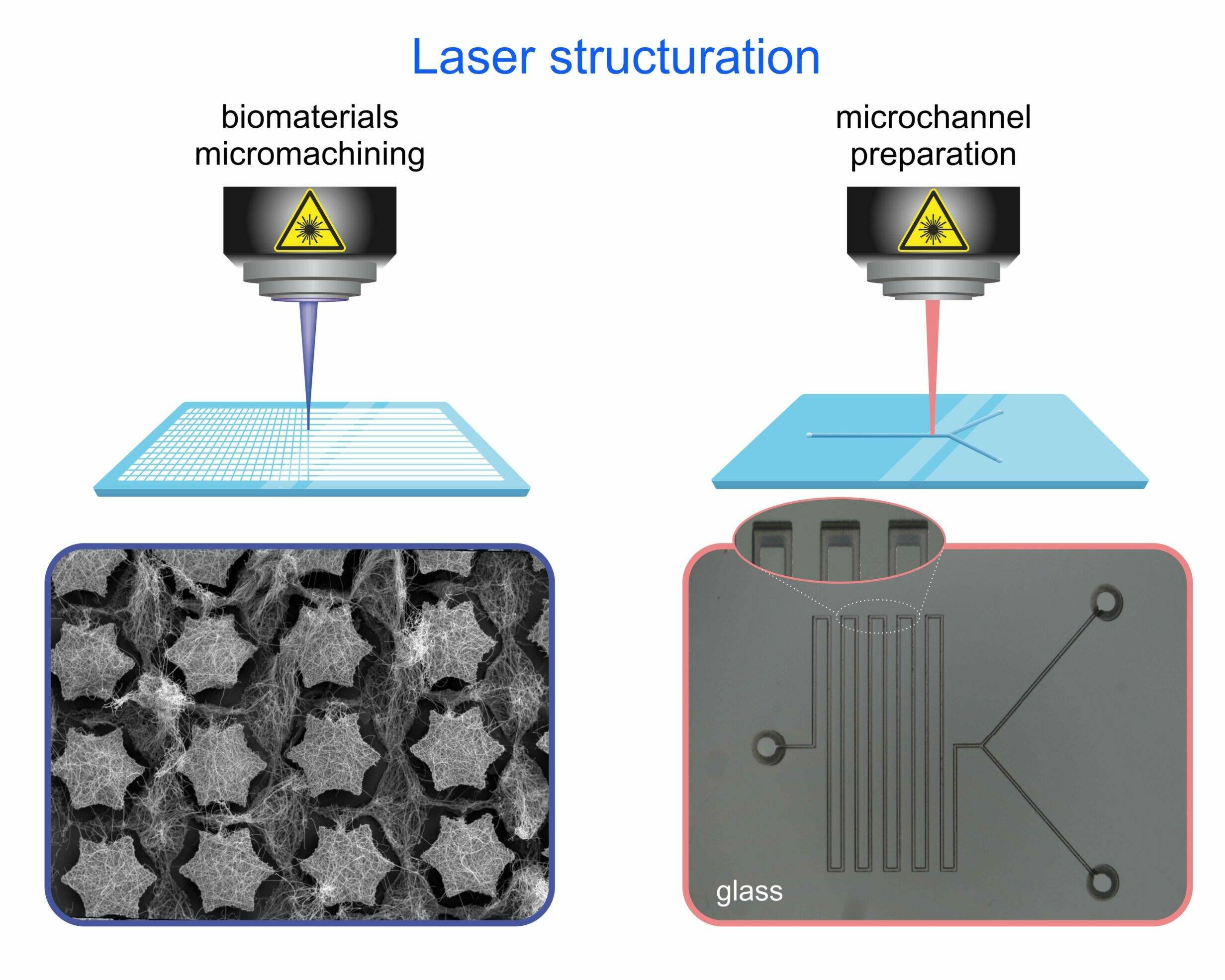
We utilize femtosecond laser processing to shape polymeric materials with high spatial precision. Our primary focus is on structuring electrospun nanofiber mats, which we modify through selective ablation, fiber fusion, and local compaction. This enables us to transform disordered fiber networks into well-defined micro-architectures, including microscaffolds, channels, openings, and regions with tailored porosity. The method preserves the nanofiber morphology while enabling features that cannot be achieved by electrospinning alone. The resulting porous microarchitectures are suitable for applications in biomedical engineering, sensing, and microfluidics.
Biomaterials development
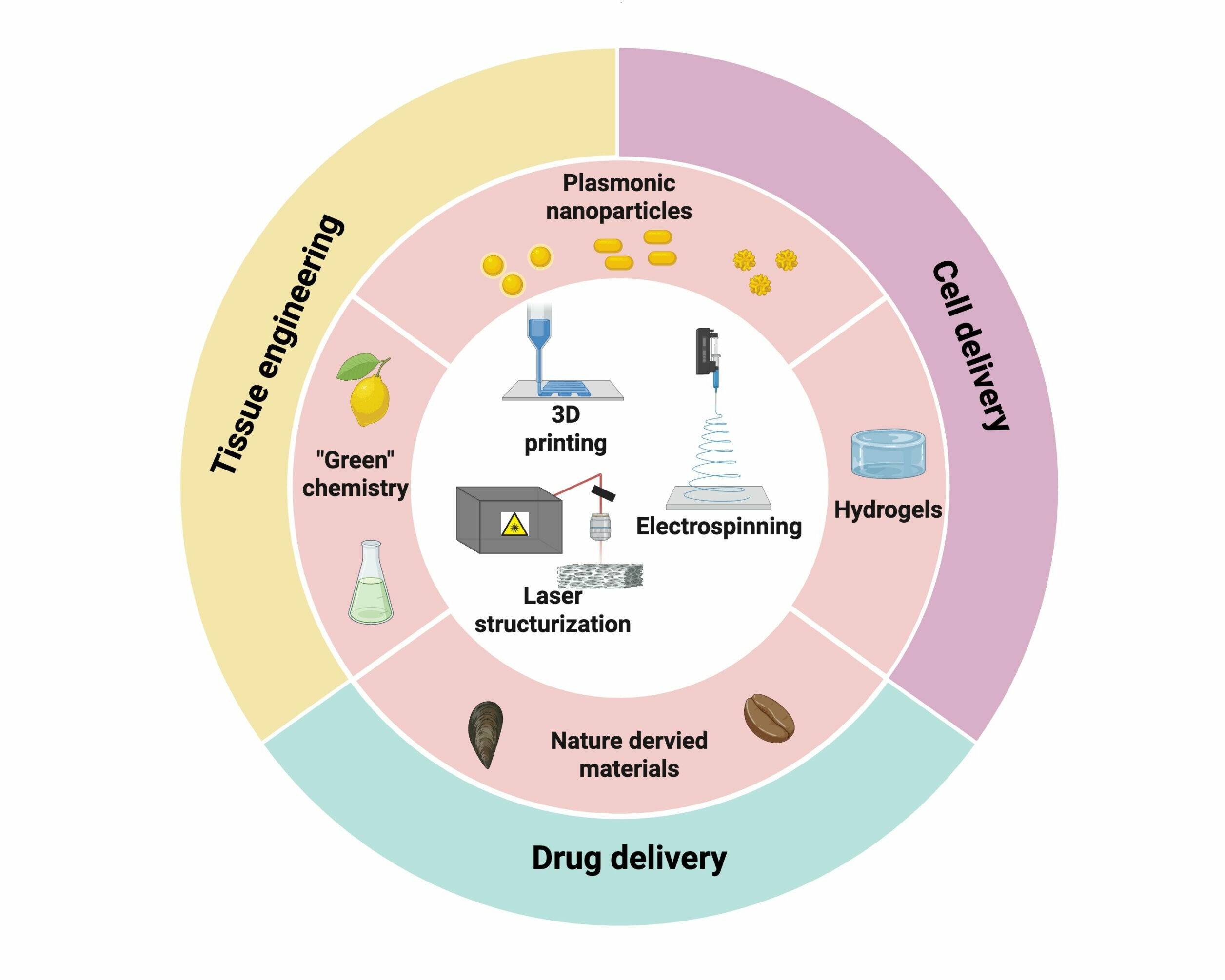
We design advanced biomaterials based on electrospun fibers, 3D-printed structures, and hydrogels, utilizing both synthetic and natural polymers. Our research focuses on applications such as wound healing, the treatment of atopic skin conditions, and the targeted delivery of drugs and cells. To develop smart biomaterials, we integrate plasmonic nanoparticles and thermoresponsive components to fabricate stimuli-responsive platforms. By incorporating nature-derived materials, applying “green” chemistry approaches, and employing laser structuring techniques, we enhance the biocompatibility, architecture, and mechanical performance of our biomaterials.
Sustainable materials
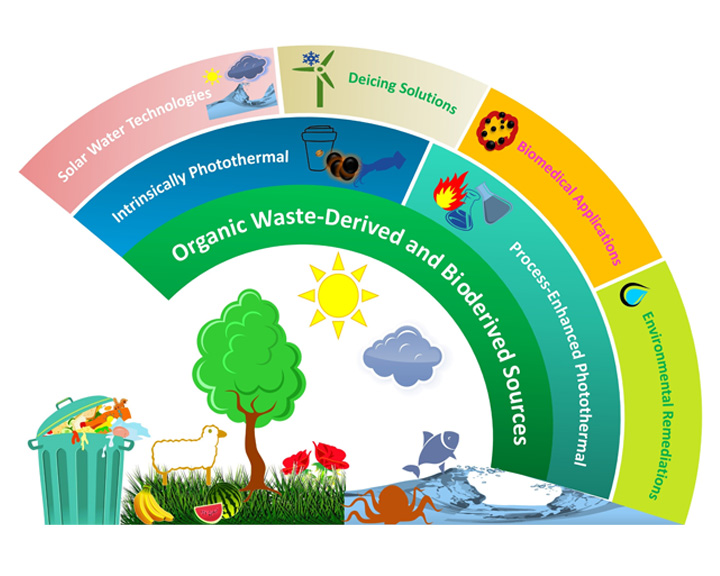
We explore sustainable materials derived from natural and renewable sources, focusing on their unique functional properties. Our research focuses on transforming biowaste and bio-derived compounds into high-performance materials with intrinsic antibacterial, antioxidant, and photothermal functionalities. Combining green chemistry, bio-inspired strategies, and advanced processing techniques, we aim to replace conventional polymers with bio-based alternatives that meet the demands of modern applications. In the field of functional surfaces and nanostructured biomaterials, we specialize in light-responsive systems for biomedical applications.